
Why Your Feet Are Killing You At Work (And the fix most workers miss)
71% of workers on hard surfaces report chronic foot pain. Most of them have spent real money trying to fix it. Premium boots. Gel inserts from the drug store. Custom orthotics from the podiatrist. Ice baths, stretches, painkillers that are becoming a daily habit instead of an occasional one. And nothing holds past the first month. That's not bad luck. It's not your body breaking down. It's a specific mechanical failure happening inside your boot that almost nobody in the footwear industry explains clearly enough for workers to actually understand. Once you understand it, everything changes. The pain makes sense. The failed solutions make sense. And the path to fixing it becomes obvious. Here's what's really going on…

Most Workers With Foot Pain Have Perfectly Healthy Feet
Dr. Michael Torres is a certified podiatrist who's spent the last 17 years treating workers on hard surfaces. Construction, mining, warehousing, manufacturing, hospitality, healthcare. Thousands of workers across every industry where the job keeps you on your feet.
And he kept running into the same pattern. Workers would come in with heel pain, arch pain, burning sensations that started a few months into a new job or a new pair of boots. They'd tried everything the system tells you to try. Expensive boots. Gel inserts. Custom orthotics. Physiotherapy. Some had been told to consider cortisone injections. A few were already looking at surgery.
But when Dr. Torres examined their feet, most of them were structurally fine. No abnormalities. No genetic predisposition. No underlying conditions that would explain the level of pain they were in.
Healthy feet. Crippling pain. And nothing they'd bought or been prescribed was making a lasting difference.
The problem wasn't their bodies. It was something happening inside their boots that nobody had ever explained to them properly. Something so invisible, so gradual, that most workers never connect it to the pain until the damage is already well underway.
The Invisible Failure That Starts In Week Three
Every insole on the market, from the $10 foam insert at the drug store to the $70 orthopedic model from the podiatry supply shop, is made from material that permanently compresses under sustained load. Under office or retail conditions, where you're sitting half the day and walking on carpet, these materials hold up for 6 to 12 months. Under real work conditions, the kind where you're on concrete or steel grating for 10 or 12 hours carrying your full body weight plus tools and load weight, they fail in weeks.
The cellular structure of the foam crushes under repeated impact and doesn't recover. It's not like a sponge that springs back. The cells break down permanently. But here's why nobody catches it: the insole still looks the same on the surface. If you press it with your thumb, it feels like it's working. It's only under the sustained pressure of your full weight, over hours, that the loss becomes real. And by then, it's already lost 30 to 50% of the cushioning your feet are depending on.
Dr. Torres confirmed this by testing insoles pulled from 200 workers across different industries. He measured them with a caliper and compared them to brand new versions of the same model. Every single one showed permanent compression deformation within 8 to 12 weeks of heavy use. One worker's insoles, only eight months old, had lost 47% of their original height. Permanently. Invisibly.
He named this mechanism Collapse Fatigue. And it's the starting point of everything that goes wrong after.
Here's the part that makes this worse. If you look at the product guides for most major work boot brands, they actually acknowledge it. Buried in their technical documentation, most of them describe their stock insoles as "minimal" or "designed to meet basic manufacturing standards." Some openly recommend replacing them with aftermarket insoles for "enhanced support and comfort." In other words, the $300 boot you're wearing was built with a $5 insole that the manufacturer knows won't survive your workday. The leather is premium. The steel cap is solid. But the component your body actually relies on every single step is the cheapest part of the build, and it's the first thing to fail.
measured in work insoles
Collapse Fatigue
What Happens To Your Body When Your Insole Stops Doing Its Job
Under the heel of every human foot is a thick, springy pad of fat. It's your body's natural shock absorber, the one that was there before you ever wore a boot. When your insole is working properly, this pad shares the load. The two systems work together, the engineered cushioning from below and the biological cushioning from within, to absorb the thousands of impacts your heel takes every shift.
When the insole has collapsed and you don't know it, the fat pad takes every step alone. Concrete, tile, steel grating, eight or ten or twelve hours a shift, with nothing meaningful between your heel bone and the hard surface below. The fat pad gets crushed a little more every day. It thins. The tissue loses its elasticity. The blood supply to it weakens. And unlike a muscle strain or a bruise, the fat pad doesn't bounce back on its own. Once it's gone past a certain point, the damage is difficult to reverse.

This condition is called Fat Pad Atrophy. It's the burning under your heels that's already there by lunchtime. The deep, throbbing ache that follows you into the truck on the way home. The feeling some workers describe as walking on stone by the end of a shift, where every step sends a jolt up through the heel because there's simply nothing left to absorb it.
But the damage doesn't stop at the heel. Once the fat pad is gone, the plantar fascia, the tough band of tissue that holds your arch together, starts taking stress it was never designed to handle. It overstretches. It inflames. Microscopic tears form in the tissue and don't heal between shifts because every shift adds more damage on top of the last. That's Plantar Fasciitis, the sharp, knife-like pain in your arch that's worst in the morning when you first step out of bed.
About 1 in 3 workers on hard surfaces will develop it. And because most treatments, ice, stretching, anti-inflammatories, even custom orthotics, only address the inflammation and not the collapsed insole that's causing it, the pain keeps returning no matter what you try.

"Only a couple of weeks in and I can honestly say these are helping keep my feet pain free after long shifts in heavy chainsaw protection boots. I will be continuing to use them in all my work boots."
How Foot Pain Quietly Becomes Knee Pain, Back Pain, And A Career Problem
This is the part most workers never connect until it's well advanced. When your feet hurt, your body doesn't just absorb it. It compensates. You shorten your stride without thinking about it. You shift your weight to the outside of your boots to take pressure off the heel that's burning. You change the way you stand, the way you climb stairs, the way you step off a ladder.
Every one of those compensations sends misaligned load up through your knees, your hips, and your lower back. Not dramatically, not all at once, but steadily, shift after shift, week after week. The body is a kinetic chain. When the foundation is compromised, every joint above it absorbs stress it was never designed to carry.
Most workers assume the knee and back pain is separate from the foot pain. They think it's age, or the weight they've put on, or the labour catching up with them after years in the trade. They look at older workers limping out of the site and quietly start expecting the same future for themselves.
But Dr. Torres found that in the majority of the workers he treated, the knee and back issues traced directly back to foot compensation patterns that started when their insoles collapsed. 76% of workers in his later trial reported that their knee and back pain improved when their foot pain was properly addressed at the source. Not with painkillers. Not with orthotics. By fixing the structural failure that started the cascade in the first place.
Every Solution You've Tried Treats A Symptom. None Of Them Addresses The Cause.
This is the part that's hardest for most workers to hear, because it means the money and effort you've already spent wasn't wasted on the wrong brand or the wrong model. It was spent on the wrong category of solution entirely. Every fix most workers reach for is designed to treat a symptom that sits downstream of Collapse Fatigue. None of them prevent the structural failure that's creating the symptoms in the first place.
($600–$800)
The pattern is the same every time. Something new goes in. It feels better for a few days, maybe a couple of weeks. Then the relief fades and the pain creeps back, and you start the cycle again with the next product. That cycle only breaks when the insole underneath your foot is built from material that doesn't permanently compress under sustained work conditions.
"I’m 66 and still work 32hrs per week as a fitter/machinist. I am on concrete all day. SoleBrace are the difference between getting home and needing to sit down or getting home and still being motivated to do something in the shed or yard."
A Cushioning System Built For The Conditions That Destroy Every Other Insole
Hospital surgical teams who stand on operating room floors for 8 to 12 hours at a time don't use foam insoles. They can't afford to. A surgeon whose feet give out mid-procedure isn't just uncomfortable, they're a liability. So hospitals invest in multi-layer compression-resistant systems, insoles engineered specifically to hold their structure under sustained load on hard surfaces, shift after shift, without permanently deforming.
These systems cost hospitals $200 to $400 a pair. They've been effective for years. But until recently, that kind of engineering wasn't available to the workers who arguably need it most, the ones doing 10 and 12-hour shifts on concrete, gravel, and steel grating with heavier loads and harder surfaces than any operating room.
SoleBrace® built the WorkFit™ Cushioning System on the same principle.
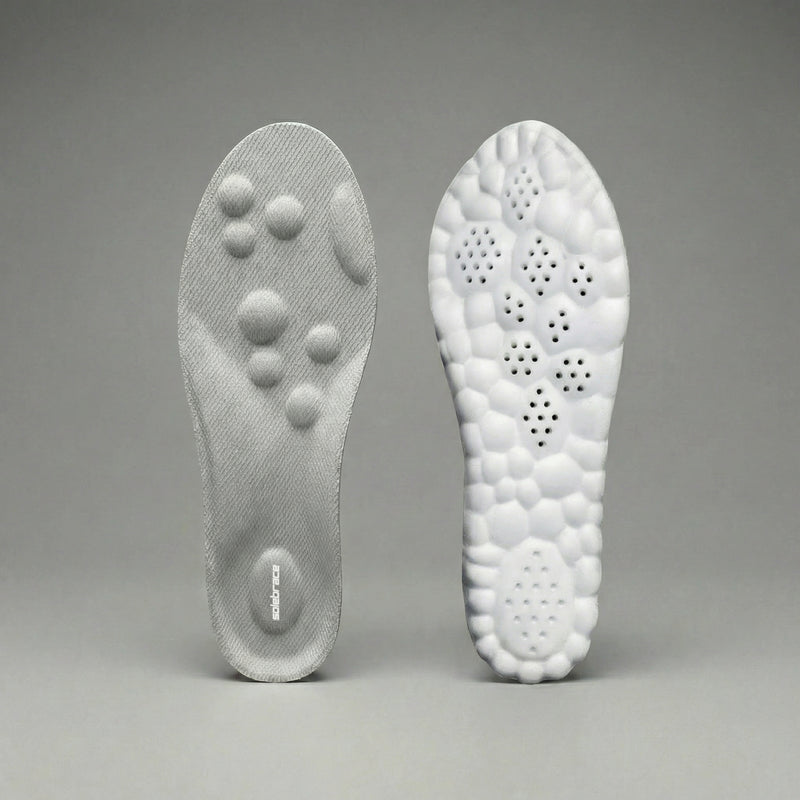
Four layers, each one engineered to prevent a specific stage of Collapse Fatigue. Built for the worker. Fits any boot. Priced like an insole, not a hospital supply contract.

Rebound Pods
High-density material at the base, rated for millions of compression cycles rather than thousands. These absorb impact and spring back fully, preventing the permanent collapse that leaves your fat pad unprotected.
Memory Foam Core
Adapts to the unique shape of your foot, but with elastic recovery that resists permanent compression. This is the layer that gives you cushioning that actually lasts from the first shift to the last, not just the first week.
Orthopaedic Arch Support
Maintains your foot's natural structure under load, taking pressure off the plantar fascia so it doesn't overstretch and inflame. This is what stops the sharp arch pain that wakes you up in the morning.
Breathable Honeycomb Base
Distributes your weight across the entire foot surface so no single pressure point gets crushed. This prevents the concentrated impact that accelerates fat pad damage, and keeps airflow moving to reduce heat and moisture.
Because WorkFit prevents Collapse Fatigue at the source, it stops the entire cascade before it starts. The fat pad stays protected. The fascia doesn't overstretch. The knees and back stop compensating for a broken foundation. Not by masking symptoms. By preventing the structural failure that creates them.

"I've been a podiatrist for 17 years. I've never seen anything that addresses the root cause like this does." — Dr. Michael Torres, DPM
Dr. Torres put WorkFit through a 90-day worker trial. He worked with SoleBrace to fit 150 workers across construction, mining, warehousing, manufacturing, and hospital floors. Every participant was dealing with chronic foot pain. Every one of them had already tried multiple other solutions that failed.
The insoles were measured at the end of the trial with the same caliper test Dr. Torres used in his original research. After 90 days of real work on real job sites, WorkFit insoles showed an average compression loss of just 4%. Standard foam insoles lose 40 to 50% in the same period. Dr. Torres was convinced enough to start wearing them himself every clinical day, and to give a pair to his daughter, a nurse working 12-hour hospital shifts.
What Workers Are Saying
Real customers. Real shifts. Real results.
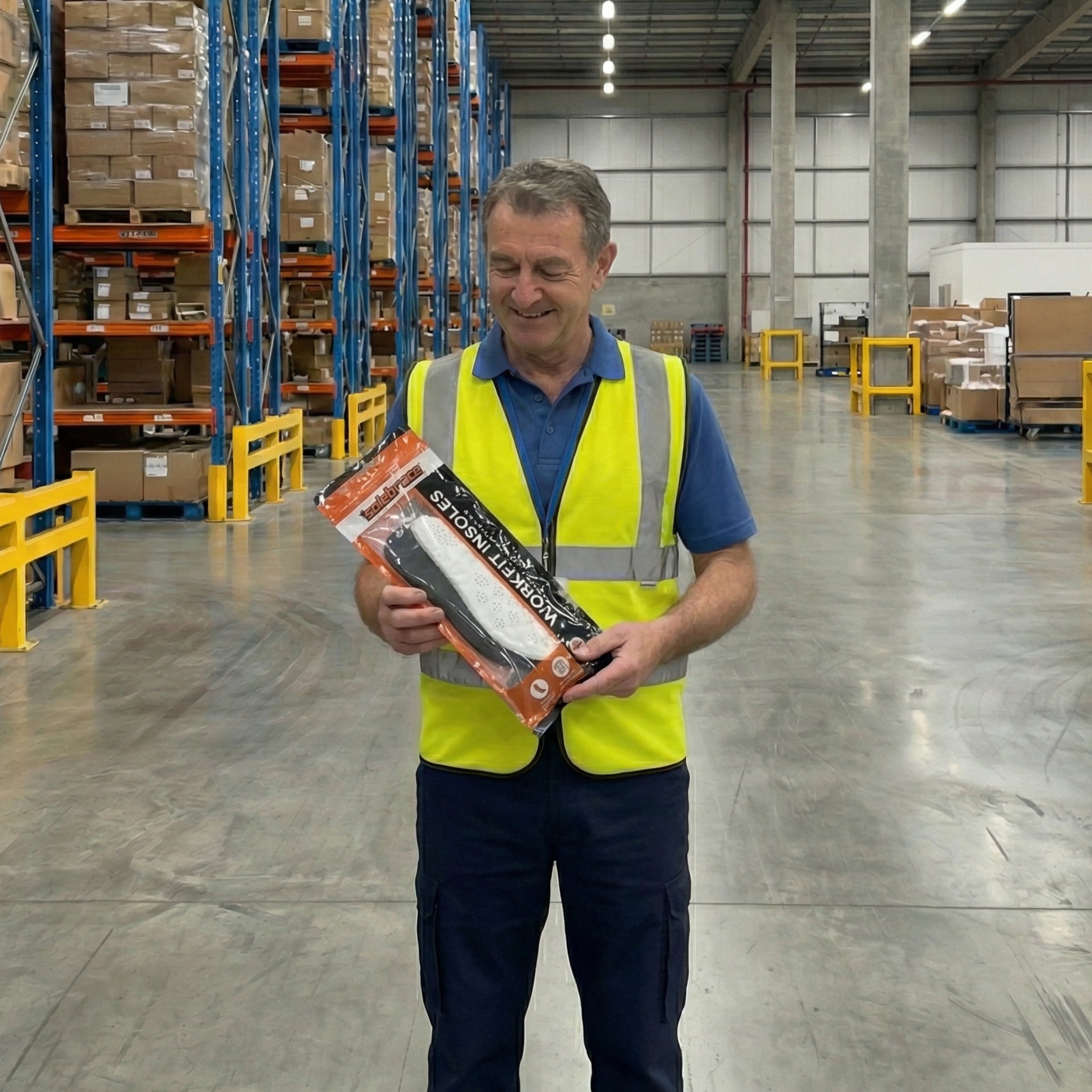
"I used to finish shifts limping to my car with aching heels and stiff knees. These insoles changed everything."
"I'm 52 years old and I've been working in warehouses most of my life. Ten hours a day on concrete floors. Before these, I'd finish a shift with my heels aching and my knees stiff as boards. By the time I got to the car I was worn out. From the first week I noticed my feet were not burning by lunchtime. I still get tired, that comes with the job, but I am not limping at the end of the day."
Sole Relief Built for Workers

HURRY! STOCK IS LIMITED!
Due to high demand, SoleBrace WorkFit™ Insoles have a high chance of selling out again. Order now to secure yours. Backed by our hassle-free 30 day guarantee.
Description
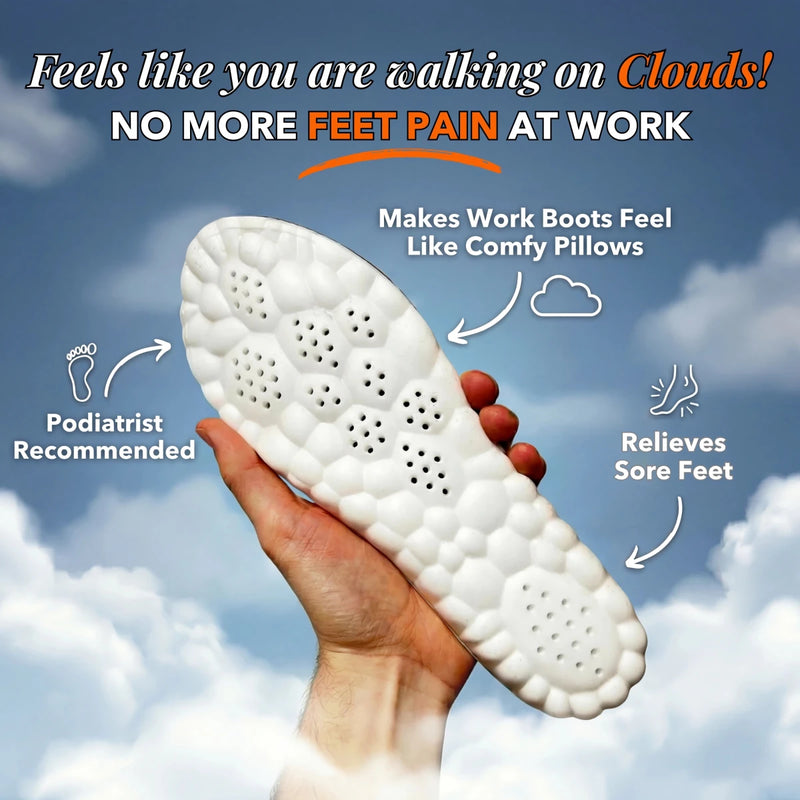
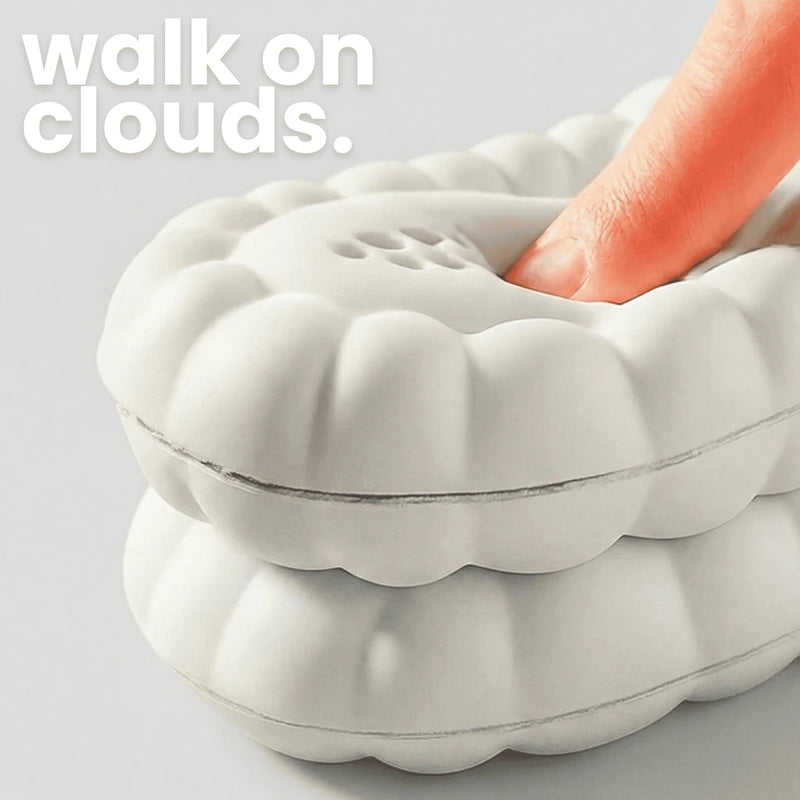
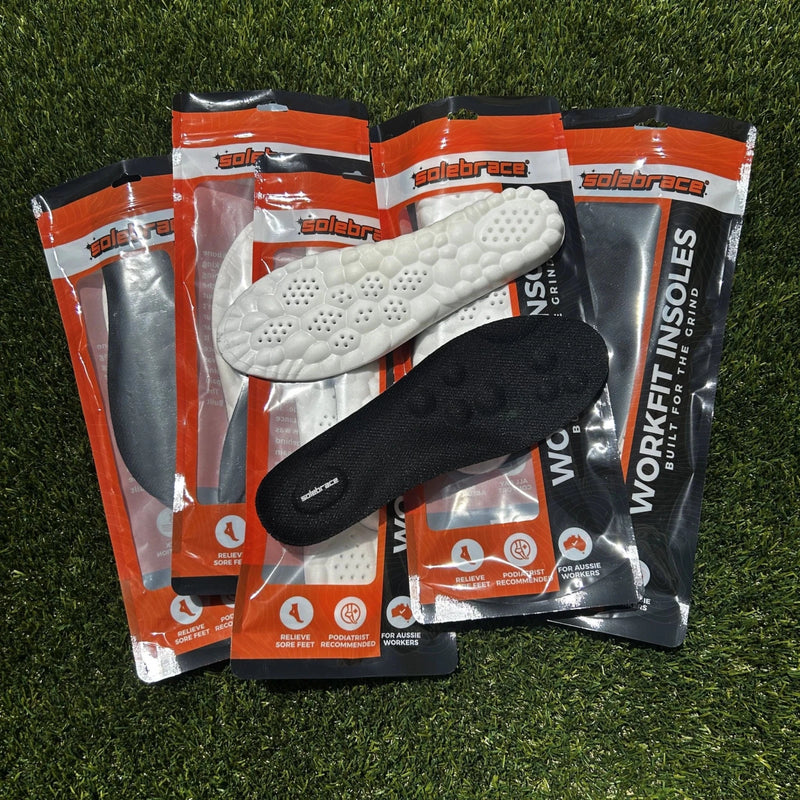
Standard insoles flatten within weeks. WorkFit™ Insoles keep their shape shift after shift with the WorkFit™ Cushioning System, engineered to stop Collapse Fatigue, the gradual breakdown that wears your body down from the ground up.
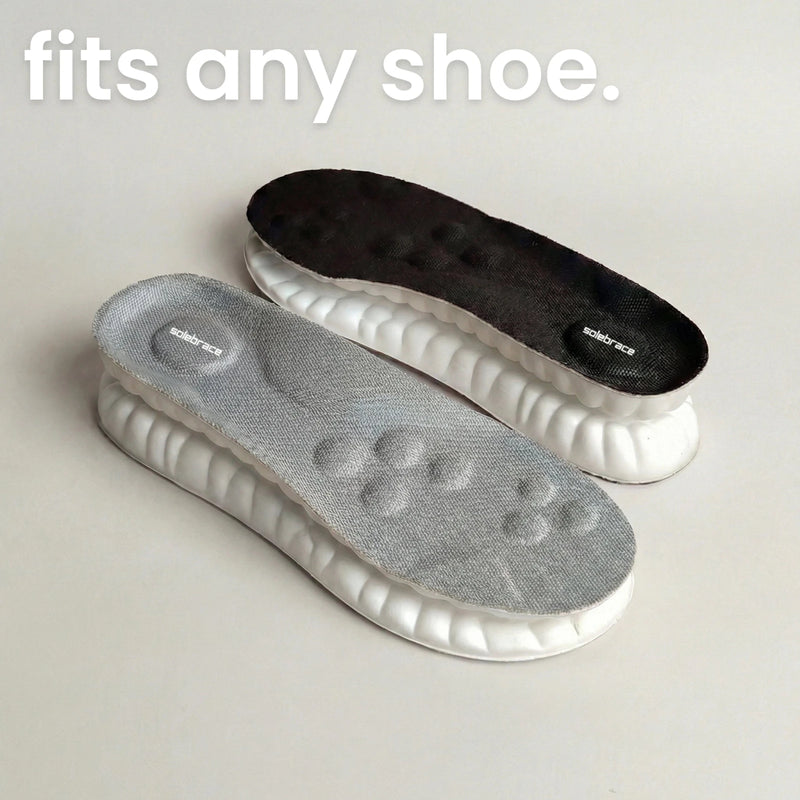
Rebound Pods absorb impact and return energy. Memory foam moulds to your foot without packing down. Orthopaedic arch support stabilises your structure. The breathable honeycomb base spreads pressure evenly under heavy loads.
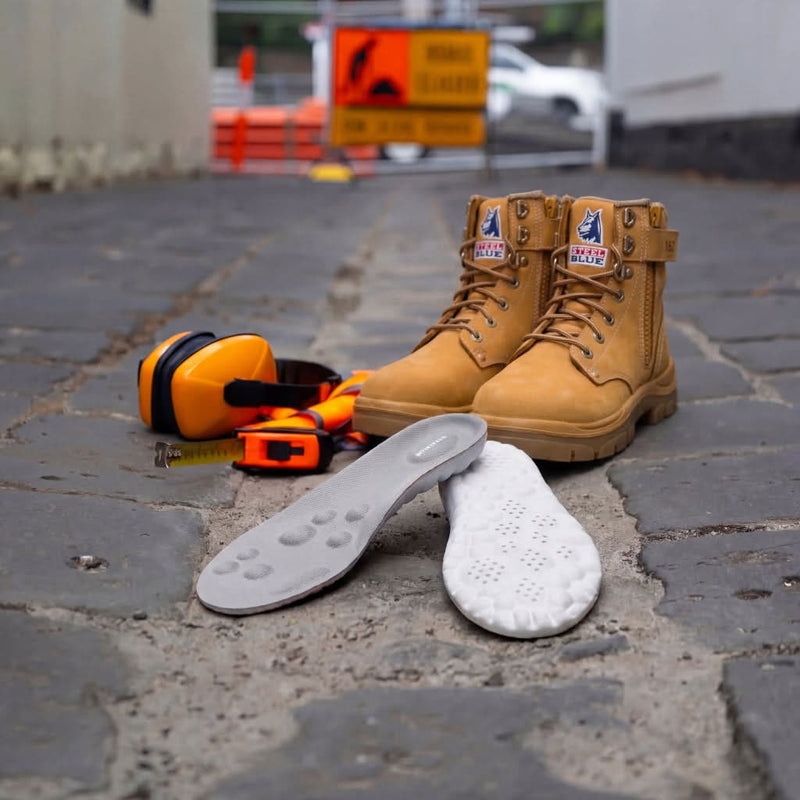
Slip them into your work shoes and feel the change from the first step to knock off. Built not just for today, but for months of full shifts ahead.
Why WorkFit™ Insoles
WorkFit™ Insoles aren't squishy gel pads that flatten down by lunch. They're engineered for strenuous work conditions–built to handle punishing surfaces, long hours, and constant movement without caving in.
The difference? Multi-layer, zone-specific construction that resists the collapse that kills ordinary insoles. Where chemist-bought inserts compress flat within weeks, our WorkFit™ Cushioning System maintains its shock-absorbing structure through months of heavy use.
Reinforced zones stay firm where your foot needs support most. The honeycomb base locks everything together, keeping the system stable under load.
They work in any work shoes. They survive any workplace. And they outlast standard insoles by years, not weeks.
Benefits
WorkFit™ keeps you working. Keeps you providing. Keeps you whole.
When cheap insoles collapse, your body compensates. Feet cop it first. Then knees. Then back.
Collapse Fatigue is what's destroying your feet. When insoles lose structure, your heel absorbs full impact–crushing your natural fat pad.
WorkFit™ stops it. Multi-layer zones that don't quit. Arch support that lasts. Shock absorption that protects your knees and back.
Walk off work without limping. Play with your kids. Still be the reliable one at 60, not the one on light duties.
Shipping & Delivery
We process orders within 1-2 business days. After dispatch, the estimated delivery time is about 6-12 business days based on the shipping method you choose (Standard or Priority).
Return & Refund Policy
We want you to love your SoleBrace purchase! If you're not completely satisfied, reach out within 30 days of delivery.
Contact us at support@solebrace.com – we're always here for you!
Built for the job. Not the shelf.
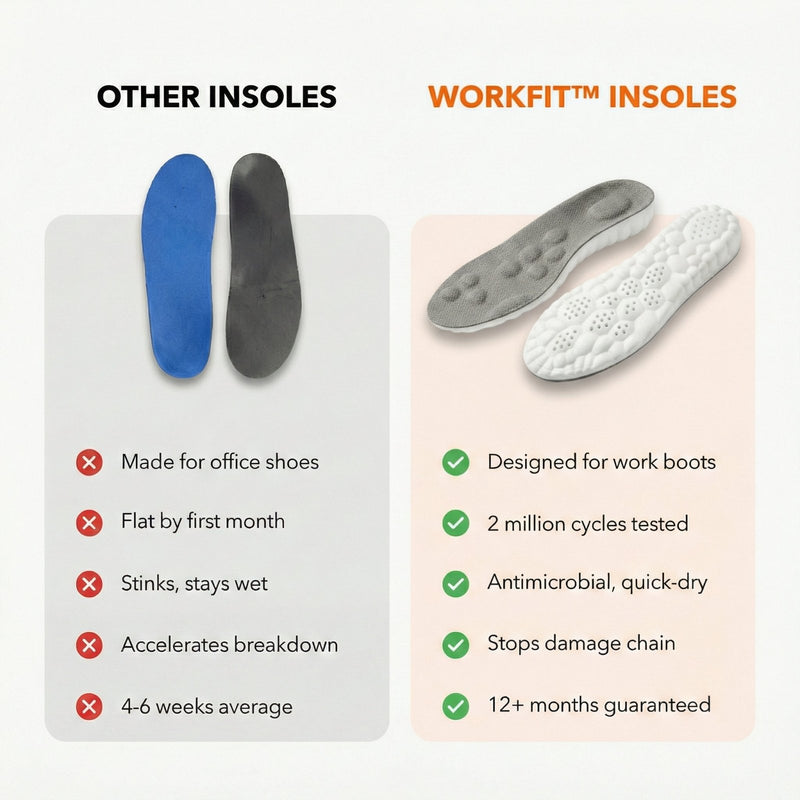
Here's how WorkFit stacks up against the insoles you've been replacing every few months.

The insoles are.Fix the foundation.
Every shift on a collapsed insole adds to the damage. The fat pad gets thinner. The cascade climbs higher. The window to catch this before it becomes harder to reverse gets narrower. WorkFit stops it at the source, and the 30-day guarantee means you risk nothing to find out if it works for you.
127 out of 150 workers in the trial got significant pain reduction. 89% stopped needing painkillers to finish a shift. 76% saw their knee and back pain improve.
Wear them for 30 days. If they don't work, send them back. Full refund, no questions.